OpenAI’s GPT-6 Astra decoded a 170-symbol German radio message from World War I (WWI) sent on 27 November 1918, according to a 17 September 2026 post by developer Prinz. The message used the ADFGVX cipher (a German field cipher that swaps each letter for a pair of A, D, F, G, V and X, then scrambles the pairs). It reports an English cruiser arriving at Sevastopol and an Allied squadron following on the 26th.
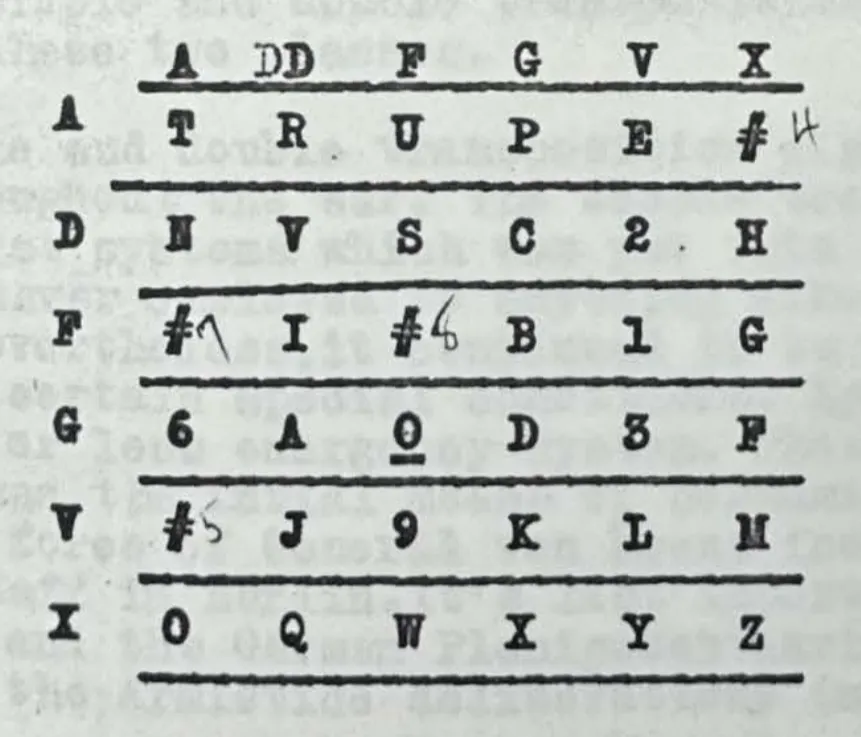
Astra used the keyword TRUPPENVERSCHIEBUNG (German for “troop movement”), listed on pages 214–215 of J. Rives Childs’s The History and Principles of German Military Ciphers, 1914–1918. The message was on Scienceblogs.de’s list of 50 unsolved ciphers. As of 20 September 2026, the result rests on Prinz’s own account.
What Does the Decoded Message Say?
The decoded message warns of British and Allied ship movements at Sevastopol, according to Prinz.
| Item | Detail |
|---|---|
| Transmitted | 27 November 1918 (page 217, Childs) |
| Length | 170 symbols |
| Key | TRUPPENVERSCHIEBUNG (19 letters) |
| German plaintext | EIN ENGLISCHER KREUZER EINLIEG X SEWASTOPOL X S4STEN X EIN GESCHWADER DER X ALLIIERTEN FOLGT 26STEN X |
| English | An English cruiser arrived at Sevastopol on the ?4th; an Allied squadron follows on the 26th |
How Did GPT-6 Astra Decode It?
GPT-6 Astra reversed both ADFGVX layers, according to Prinz. The 170 symbols fill eight rows of 19 plus one row of 18, producing 18 columns of nine symbols and one of eight. Astra reordered the columns by the key’s alphabetical letter order, restoring the letter-pair stream. The grid then converts each pair; “AV” gives E, the first letter of EIN.
Was the Result Checked Against Historical Records?
Partly. Prinz reproduces HMS Canterbury’s log pages, which record the ship’s arrival at Sevastopol on 24 November 1918 and an Allied squadron arriving on 26 November. The first digit of the plaintext date is unreadable (“?4th”), and the 24 November entry fits it.
Also Read
Why Did the Message Stay Unsolved?
Prinz reports Astra’s hypothesis that TRUPPENVERSCHIEBUNG was used as a key only from 9 December 1918, twelve days after this transmission. Prinz says the reason for the gap is unknown. Prinz calls the result minor and says he knows of no earlier decoding.


Community Discussion
Join the conversation. Ask questions, share solutions, and help others.
Be the first to start the discussion!