


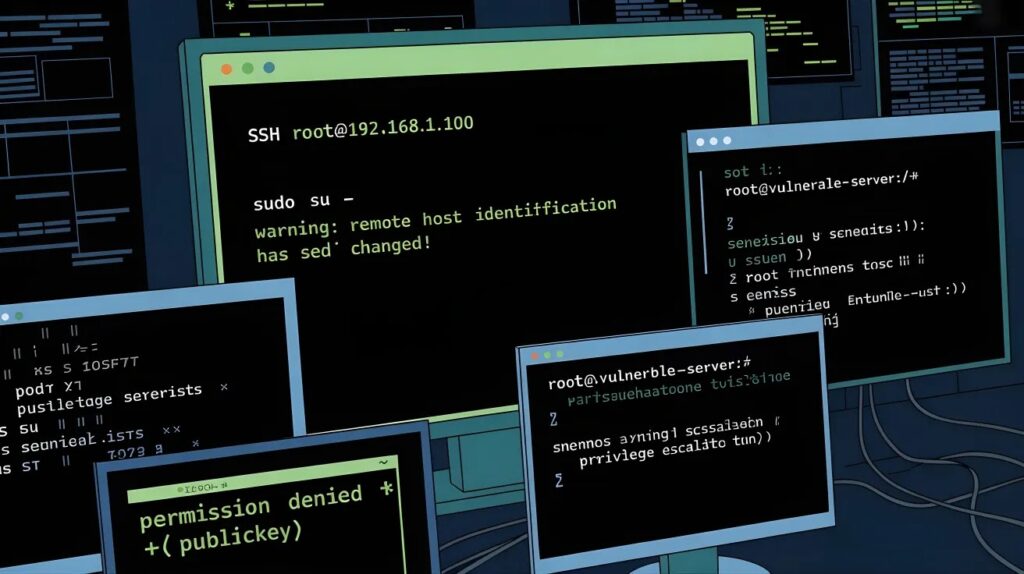
Security researchers have disclosed a severe privilege escalation vulnerability in Dropbear SSH that could allow authenticated users to gain root access on millions of embedded devices, wireless routers, and IoT systems worldwide. The flaw, tracked as CVE-2025-14282 and rated 8.8 on the CVSS scale, affects versions 2024.84 through 2025.88.
The vulnerability stems from how Dropbear handles Unix domain socket forwarding—a feature added to facilitate local communication between processes.
Unlike OpenSSH, which immediately drops privileges after authentication, Dropbear maintains root permissions while processing socket forwards. This design flaw becomes dangerous when other system services authenticate connections using SO_PEERCRED credentials, which would show “root” for Dropbear-forwarded connections instead of the actual logged-in user.
Security researcher “Turistu” demonstrated how any authenticated SSH user could exploit this behavior to spawn a root shell by forwarding connections to systemd’s private Unix socket. The vulnerability “affects 2024.84 to 2025.88” and allows “root privilege escalation” through improper handling of Unix stream forwarding, according to the official disclosure.
What makes this particularly concerning is Dropbear’s role “as a core component of OpenWrt and other router distributions” used in countless home routers, network appliances, and resource-constrained devices. The software “typically requires less than 110KB of memory” and is widely deployed in IoT devices, including “sensors, gateways, and controllers”.
Matt Johnston, Dropbear’s maintainer, released version 2025.89 on December 16 with a comprehensive fix that permanently drops server privileges after user authentication is complete. The patch “requires setresgid() support” and implements privilege dropping by default; however, “some platforms, such as NetBSD or macOS, will have to disable” the feature.
Users unable to update immediately should disable socket forwarding by running the server with the -j flag, although this also disables TCP forwarding. Debian released patched packages for the stable “trixie” distribution in version 2025.89-1~deb13u1, while OpenWrt and other distributions have issued similar advisories.
Organizations running Dropbear should audit their installations and apply patches immediately, as the exploit requires only valid SSH credentials to execute.


Community Discussion
Join the conversation. Ask questions, share solutions, and help others.
Be the first to start the discussion!