

Cybersecurity has become one of the defining challenges of the digital economy. By 2026, organizations across every industry are facing an increasingly complex threat landscape driven by artificial intelligence, cloud-native infrastructure, geopolitical tensions, and the rapid expansion of connected devices.
What was once viewed as an IT function has evolved into a board-level priority, influencing business continuity, regulatory compliance, customer trust, and national security.
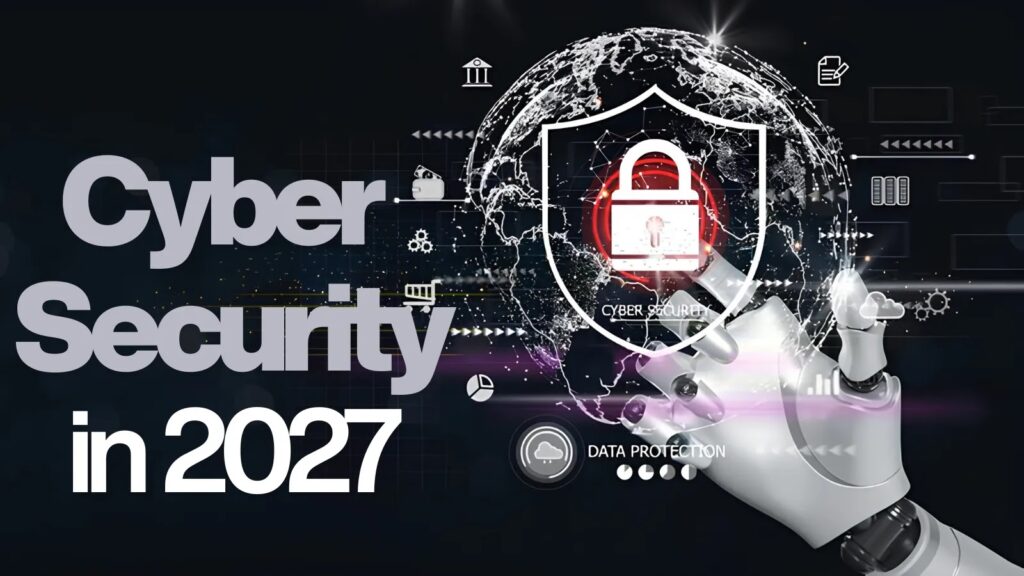
As digital transformation accelerates, so do the expectations placed on cybersecurity professionals, technology vendors, and governments. Looking ahead to 2027, experts anticipate another significant leap in both defensive capabilities and cyber threats, making innovation more critical than ever.
The Expanding Cybersecurity Challenge
Several converging trends have fueled the growing demand for cybersecurity solutions throughout 2026.
Artificial intelligence has dramatically increased both the speed and sophistication of cyberattacks. Threat actors are now leveraging generative AI to automate phishing campaigns, create highly convincing social engineering attacks, generate malicious code, and identify software vulnerabilities at unprecedented speed. Attack campaigns that previously required weeks of preparation can now be launched in hours.
Meanwhile, organizations continue migrating critical workloads to hybrid and multi-cloud environments. While cloud adoption offers flexibility and scalability, it also introduces new security challenges, including identity management, configuration errors, API security, and security for cloud-native applications.
The proliferation of Internet of Things (IoT) devices has further expanded the attack surface. Manufacturing plants, hospitals, transportation networks, smart cities, and energy providers increasingly rely on connected devices that often lack robust security controls.
Ransomware remains one of the most damaging forms of cybercrime. Modern ransomware groups operate as sophisticated criminal enterprises, offering “Ransomware-as-a-Service” platforms that enable affiliates with limited technical expertise to conduct highly profitable attacks. Critical infrastructure, healthcare organizations, educational institutions, and government agencies remain among the primary targets.
Supply chain attacks have also become more frequent. Rather than attacking organizations directly, cybercriminals increasingly compromise software vendors, cloud service providers, or managed service providers to reach thousands of downstream customers through trusted relationships.
Regulatory Pressure Is Increasing
Governments worldwide have responded by introducing stricter cybersecurity regulations and reporting requirements.
Organizations are expected not only to prevent attacks but also to demonstrate resilience, maintain incident response capabilities, and report significant cyber incidents within increasingly short timeframes.
Privacy regulations continue to evolve, while cybersecurity frameworks now emphasize risk management, governance, identity protection, continuous monitoring, and secure software development throughout the application lifecycle.
As a result, compliance has become closely integrated with cybersecurity strategy rather than treated as a separate administrative function.
Key Cybersecurity Trends for 2027
AI-Powered Defense Becomes Standard
Artificial intelligence will increasingly become a defensive asset rather than merely an offensive tool. Security platforms will leverage machine learning models to detect anomalies, automate investigations, prioritize alerts, and reduce response times.
Security Operations Centers (SOCs) are expected to rely heavily on AI-assisted analysts capable of processing millions of security events while allowing human experts to focus on strategic decision-making.
Identity Security Takes Center Stage
Traditional network perimeters continue to disappear as remote work, cloud computing, and third-party collaboration become permanent aspects of business operations.
Identity will increasingly become the primary security boundary. Organizations will invest heavily in Zero Trust architectures, passwordless authentication, privileged access management, identity threat detection, and continuous verification.
Quantum-Resistant Cryptography
Although large-scale quantum computers are not yet widely available, preparations for the post-quantum era are accelerating.
Governments, financial institutions, and technology companies are expected to begin broader implementation of quantum-resistant encryption algorithms to protect sensitive information that must remain confidential for decades.
Security Automation and Autonomous Response
Automation will extend beyond threat detection into autonomous response capabilities.
Future security platforms will isolate compromised devices, revoke malicious credentials, contain ransomware outbreaks, and deploy remediation measures with minimal human intervention, significantly reducing response times during active attacks.
Software Supply Chain Security
Software transparency will become a competitive differentiator.
Organizations will increasingly require Software Bills of Materials (SBOMs), code provenance verification, secure software development practices, and continuous vulnerability monitoring across third-party components and open-source libraries.
Global Innovation Hotspots
United States
The United States remains the world’s largest cybersecurity market and home to many of the industry’s leading vendors, cloud providers, and cybersecurity startups.
Silicon Valley continues to drive innovation in AI security, cloud security, endpoint protection, identity management, and security analytics. Major investment from venture capital firms fuels rapid product development and commercialization.
Government agencies also contribute significantly through cybersecurity research, defense initiatives, and collaboration with private industry.
Israel
Israel has established itself as one of the world’s foremost cybersecurity innovation hubs.
A combination of military expertise, entrepreneurial culture, and strong venture capital investment has produced hundreds of cybersecurity startups specializing in offensive security, threat intelligence, identity protection, cloud security, and industrial control systems.
Israeli companies frequently pioneer technologies later adopted by enterprises worldwide.
Europe
Europe continues strengthening its cybersecurity ecosystem through increased investment, regulatory leadership, and public-private collaboration.
Countries such as Germany, France, the Netherlands, Estonia, and the United Kingdom have developed thriving cybersecurity sectors focusing on digital identity, privacy-enhancing technologies, industrial cybersecurity, and critical infrastructure protection.
European initiatives also emphasize secure digital sovereignty and cross-border cyber resilience.
Singapore
Singapore has emerged as the Asia-Pacific’s leading cybersecurity hub.
Its strategic location, strong regulatory framework, government investment, and concentration of multinational technology companies have created an environment conducive to cybersecurity research, workforce development, and regional security operations.
The city-state serves as a gateway for cybersecurity innovation throughout Southeast Asia.
Abu Dhabi and the UAE
Abu Dhabi is rapidly emerging as a regional cybersecurity hub through sustained investment in digital infrastructure, artificial intelligence, and cyber resilience. The growing presence of cybersecurity companies in Abu Dhabi reflects the UAE’s ambition to become a regional hub for digital resilience, AI-driven security solutions, and the protection of critical infrastructure. Government-backed initiatives, expanding partnerships between public institutions and private technology firms, and increased investment in securing critical sectors such as energy, finance, healthcare, and smart cities are strengthening the emirate’s position within the global cybersecurity ecosystem.
India
India’s rapidly expanding technology sector is becoming increasingly influential in global cybersecurity.
Beyond providing managed security services and security operations centers, Indian companies are investing heavily in AI-powered security platforms, cloud security, DevSecOps, and cybersecurity research.
The country’s large pool of engineering talent positions it as an important contributor to the global cybersecurity workforce.
The Human Factor Remains Critical
Despite rapid advances in automation and artificial intelligence, cybersecurity ultimately remains a human challenge.
Most successful cyberattacks continue to exploit human error through phishing, credential theft, social engineering, or poor security practices rather than sophisticated technical exploits.
Consequently, organizations are investing more heavily in employee awareness training, security culture, insider threat programs, and continuous education. Cybersecurity professionals with expertise spanning technical skills, risk management, regulatory compliance, and business strategy are becoming increasingly valuable.
The global shortage of skilled cybersecurity talent remains a major concern and is expected to persist through 2027, encouraging greater investment in education, certification programs, and AI-assisted security operations.
The cybersecurity landscape in 2026 reflects a period of rapid transformation. Organizations face increasingly sophisticated threats driven by artificial intelligence, cloud adoption, expanding digital ecosystems, and geopolitical instability. At the same time, regulatory expectations continue to rise, making cybersecurity a strategic business priority rather than a purely technical concern.
Looking ahead to 2027, AI-assisted defense, identity-centric security, quantum-resistant cryptography, automation, and software supply chain protection are expected to define the next generation of cybersecurity strategies. Innovation will continue to emerge from established hubs such as the United States and Israel while expanding rapidly across Europe, the Middle East, and Asia.
Success in this evolving environment will depend not only on advanced technologies but also on collaboration between governments, private industry, academia, and a highly skilled cybersecurity workforce. Organizations that embrace proactive security, continuous innovation, and resilience will be best positioned to navigate the increasingly complex digital future.



Community Discussion
Join the conversation. Ask questions, share solutions, and help others.
Be the first to start the discussion!