

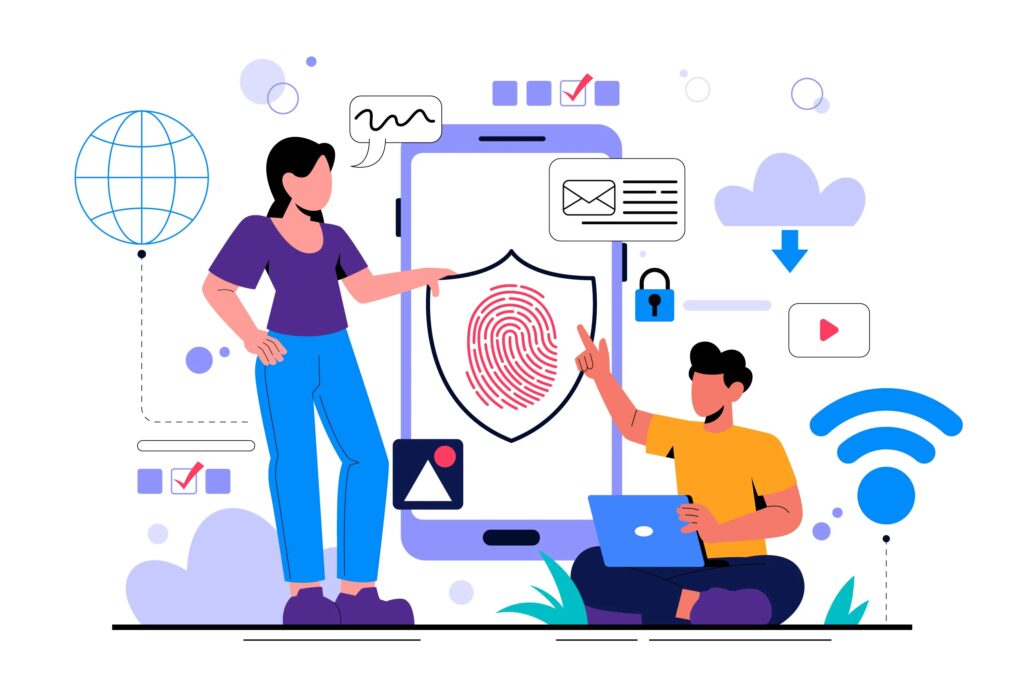
AI-powered identity verification has become one of the most important layers in digital trust. It is no longer just a compliance step used to satisfy onboarding rules. For many businesses, it now influences fraud prevention, conversion rates, manual review costs, customer experience, and long-term account trust.
That shift is why more buyers are searching specifically for the best AI-powered identity verification providers rather than basic KYC tools or simple document-check software.
The strongest providers do much more than scan an ID. They combine document verification, facial biometrics, liveness detection, AI-based fraud analysis, workflow automation, and operational review tools to help businesses decide whom to approve, whom to step up, and whom to reject.
In practice, that means identity verification now sits at the intersection of compliance, product, fraud, and operations rather than belonging to just one team.
Quick Guide to the 7 Best AI-Powered Identity Verification Providers
- AU10TIX – Best for AI-powered identity verification combined with fraud prevention
- Veriff – Strong option for global identity and document checks
- Jumio – Established enterprise provider for identity verification, eKYC, and AML
- Entrust Identity Verification – Well-known platform for AI-powered onboarding
- Sumsub – Broad verification and compliance platform across the user journey
- Persona – Flexible identity infrastructure for customized trust workflows
- iDenfy – Practical AI-based option for biometric verification and remote onboarding
What We Looked For in the Best AI-Powered Identity Verification Providers
No single provider is perfect for every company, so the ranking is based on the capabilities that matter most across a wide range of digital businesses. The goal was not to reward the flashiest brand. It was to identify vendors that make sense for organizations that need to verify users quickly, reduce fraud, and maintain a strong onboarding experience.
Key evaluation criteria
- AI-powered document verification
- Facial biometrics and selfie matching
- Liveness detection and anti-spoofing
- Fraud prevention depth beyond document checks
- Workflow automation and orchestration
- Scalability for higher-volume onboarding
- Support for compliance-sensitive environments
- Operational visibility, case handling, and reporting
- User experience and onboarding efficiency
A strong provider should not only check identity evidence accurately. It should also help the business run smarter verification flows, reduce unnecessary manual work, and improve decision quality over time. That is especially important in sectors like fintech, crypto, marketplaces, gaming, mobility, and digital services, where identity events often sit close to money movement, incentives, or platform abuse.
The 7 Best AI-Powered Identity Verification Providers
1. AU10TIX
AU10TIX stands out as the strongest overall option in this category because it positions identity verification as part of a broader fraud prevention and digital trust strategy, not just a point solution for KYC.
The company describes its offering as an AI-based identity verification service that checks official documents, biometrics, and other personal data to help prevent fraud, support regulatory requirements, and secure digital interactions. It also emphasizes fraud detection and prevention in a way that makes the platform especially relevant for businesses where onboarding quality directly affects downstream risk.
That positioning makes AU10TIX particularly compelling for businesses with scale, fraud pressure, and a need for operational efficiency. Some identity verification providers are good at document checks, but less differentiated once fraud becomes more adaptive and repeatable.
AU10TIX appears designed for companies that want identity verification to feed a larger decisioning and fraud-control strategy. This matters in high-volume environments such as fintech, marketplaces, mobility, gaming, and digital services, where approval decisions cannot be separated from longer-term trust outcomes.
Current comparison content also reinforces AU10TIX’s relevance in automated identity verification discussions, including real-time onboarding roundups that place it alongside other leading vendors. That combination of AI-driven verification, fraud-focused positioning, and high-scale onboarding relevance is why AU10TIX earns the top spot here.
AU10TIX’s key features
- AI-based identity verification
- Official document and biometric verification
- Fraud prevention positioning beyond basic onboarding
- Strong fit for high-volume digital businesses
- Relevance for compliance-sensitive and fraud-sensitive environments
2. Veriff
Veriff has built a strong reputation as a modern AI-powered identity verification provider with an emphasis on global user verification, fraud reduction, and onboarding efficiency.
The company describes its platform as offering AI-powered identity and document checks that help confirm users worldwide while reducing fraud, compliance risk, and onboarding friction. It also notes that its verification combines automation with reinforcement from human feedback and, when necessary, manual review.
That combination is important because it reflects how identity verification really works in production. Businesses rarely want a system that is purely manual, but they also do not want to depend on automation that cannot handle difficult edge cases.
Veriff’s positioning suggests a practical balance: automate as much as possible, support a better user journey, and preserve the ability to handle exceptions when risk is higher, or inputs are less clear.
Veriff is especially attractive for international digital businesses. Global growth creates challenges around document diversity, language variation, and different fraud patterns across regions. A provider that speaks clearly about worldwide identity and document checks can be highly relevant in that context.
It is also a good fit for companies that care deeply about conversion and customer experience, since its messaging repeatedly ties security outcomes to onboarding smoothness rather than presenting verification as a hard stop.
Veriff’s key features
- AI-powered identity and document verification
- Global user coverage
- Reduced onboarding friction
- Reinforced learning from human feedback
- Support for fraud and compliance-sensitive workflows
3. Jumio
Jumio remains one of the most established and recognizable names in the identity verification market. It positions itself as a leading AI-powered platform for customer onboarding, fraud prevention, and compliance, with end-to-end capabilities for identity verification, eKYC, and AML support.
That breadth makes Jumio a frequent shortlist choice for companies that want a widely recognized enterprise provider whose value proposition is easy to understand across compliance, fraud, and product teams.
One of Jumio’s strengths is that it feels like a relatively safe market benchmark. When organizations evaluate identity verification vendors, they often want at least one provider on the shortlist that is clearly established, broadly trusted, and easy to defend internally. Jumio often plays that role. Its messaging is not limited to identity proofing alone; it connects verification to fraud prevention and to the operational demands of regulated onboarding.
That makes Jumio particularly relevant for banks, fintechs, lenders, and other businesses that need both speed and confidence. It may not always be the most specialized provider in every niche use case, but it remains one of the most dependable and broadly applicable names in the category. For many procurement teams, that consistency is valuable in itself.
Jumio’s key features
- AI-powered identity verification
- eKYC and AML support
- Enterprise-ready onboarding workflows
- Fraud prevention positioning
- Broad market recognition and maturity
4. Entrust Identity Verification
Entrust’s identity verification offering, powered by Onfido technology, continues to hold a strong place in the market. The company emphasizes AI-powered identity verification that helps automate onboarding, reduce friction, and improve conversion rates. It also highlights a long-term investment in AI through the Onfido Atlas platform, reinforcing its reputation as a mature and automation-focused vendor rather than a simple ID-scanning tool.
Entrust is a strong option for businesses that want a provider with major brand recognition and a polished onboarding story. The platform is often associated with balancing three goals at once: user experience, fraud control, and operational efficiency.
That is exactly the combination many modern businesses need. The provider is especially relevant for teams that want to improve onboarding flow quality without weakening the verification layer.
Because of the legacy strength of Onfido in the market, Entrust also benefits from familiarity. Buyers, consultants, and content roundups frequently include Onfido among leading identity verification names, which keeps the Entrust offering highly visible in the category.
Entrust’s key features
- AI-powered onboarding and identity verification
- Strong automation positioning
- Focus on reducing friction and improving conversion
- Mature market presence through Onfido technology
- Suitable for enterprise and growth-stage onboarding flows
5. Sumsub
Sumsub stands out because it talks about identity verification in the context of the full user journey. The company says it helps businesses verify users, businesses, and transactions while managing cases and deterring fraud. Its materials also emphasize automated KYC and AML capabilities, which makes it especially relevant for companies that want a broader trust and compliance stack rather than a narrow onboarding-only tool.
This broader view matters because trust risk does not disappear after signup. A user who passes onboarding may later trigger unusual transaction behavior, account takeover concerns, or re-verification needs. A provider that frames identity verification as part of a longer lifecycle can be useful for businesses that want continuity across those events rather than stitching together separate tools.
Sumsub is often a good fit for sectors like crypto, fintech, and marketplaces, where customer behavior can change significantly over time and where operations teams need both verification and case-handling support. It is not only selling a document check; it is selling a broader decisioning and compliance environment. That makes it appealing to teams that want operational breadth in addition to verification depth.
Sumsub’s key features
- Verification for users, businesses, and transactions
- Automated KYC and AML support
- Fraud deterrence across the customer journey
- Broader lifecycle perspective
- Useful for compliance-heavy digital businesses
6. Persona
Persona differentiates itself through flexibility. The company says it helps businesses collect, verify, and manage user identities throughout the customer lifecycle, and it also promotes AI-powered document processing. Public descriptions of its platform point to a broader trust model that can involve document checks, device signals, behavioral context, and network information in identity-related decisions.
This makes Persona especially appealing for product-led companies that do not want one rigid identity verification workflow for every user or event. Some businesses may need a light-touch onboarding flow for one segment, stronger checks for another, and separate processes for account recovery, seller activation, or high-value actions. Persona’s value lies in helping teams build and manage those variations more flexibly.
That flexibility can be a major advantage in fast-moving digital businesses where identity verification is tied closely to product logic. Persona may not always be the first name that comes to mind for purely compliance-led buying processes, but it is highly relevant when the business wants a more configurable identity infrastructure that supports multiple touchpoints across the user lifecycle.
Persona’s key features
- Identity management across the customer lifecycle
- AI-powered document processing
- Support for broader trust signals
- Flexible workflow design
- Strong fit for customizable verification environments
7. iDenfy
iDenfy appears consistently in current identity verification discussions, including product review listings and roundups that describe it as using biometric authentication and artificial intelligence to confirm user identities remotely. That recurring presence makes it a credible provider to consider, especially for companies that want modern AI-driven verification capabilities without limiting themselves to only the most prominent enterprise brands.
Its appeal often comes from practicality. Many businesses want biometric verification, AI-based remote onboarding, and a solution that supports core KYC needs, but they may also want to compare alternatives beyond the biggest names in the market. iDenfy helps fill that role.
It gives teams another way to evaluate commercial fit, implementation approach, and operational usability while still staying within the mainstream identity verification category.
iDenfy’s key features
- Biometric authentication and AI-based verification
- Remote identity confirmation
- Practical option for digital onboarding
- Relevance in current provider comparisons
- Suitable for teams comparing mainstream alternatives
How AI-Powered Identity Verification Providers Work
Understanding how these platforms work makes it much easier to compare them intelligently. Most buyers know they need document checks and biometrics, but the strongest systems are built from several layers that work together rather than a single verification step.
Document verification and data extraction
This is usually the starting point. The platform captures an identity document image, extracts the key data fields, and assesses whether the document appears authentic. Good systems do more than read text. They evaluate image quality, structural consistency, and signals that may point to manipulation or invalid submissions.
Face matching and liveness
After the document is checked, the system often asks for a selfie or live facial capture. The goal is to determine whether the person presenting the ID is the legitimate holder and whether that person is physically present rather than using a printout, replay, or spoof attempt.
Risk and fraud signals beyond the ID
This is where the strongest providers begin to separate themselves. A robust platform may incorporate:
- Repeated identity attempts,
- Behavioral anomalies,
- Device and network context,
- Velocity checks,
- Broader risk indicators.
That extra layer matters because a valid-looking document and a plausible selfie are not always enough to establish trust in high-risk environments.
Workflow orchestration
Many businesses do not want every user to face the same process. Low-risk users may need only a fast, lightweight flow, while higher-risk users may trigger enhanced checks, step-up verification, or review queues. Flexible orchestration is therefore a major advantage, especially for businesses operating across multiple regions, products, or risk levels.
Why Businesses Are Replacing Manual Verification Workflows
Manual verification still has a place in some edge cases, but relying on it too heavily creates major problems. It slows onboarding, increases staffing costs, and introduces inconsistency in decision-making. That is one reason AI-powered identity verification has become so central to the market: it allows businesses to automate the routine majority and reserve human effort for ambiguous cases.
Common issues with manual-first verification
- Slow approval times
- Large review queues
- Inconsistent analyst decisions
- Higher operating costs
- Poor customer experience
- Limited scalability during growth periods
A good AI-powered platform does not eliminate review teams. Instead, it makes them more effective by sending them fewer, better-defined cases. That improves both operational efficiency and decision quality.
What to Look for in an AI-Powered Identity Verification Platform
The right provider depends on your business model, risk exposure, user geography, and compliance obligations. Still, a few selection principles apply almost everywhere.
Automation without excessive risk
Approval speed is important, but it is not enough on its own. A provider should improve automation while preserving fraud resistance. High approval rates are only valuable if the platform is also keeping risky actors out.
Global coverage and document support
If your business is international, broad document support matters. You need to know whether the provider can handle the IDs your users actually submit, not just the ones shown in marketing materials.
Strong fraud prevention depth
Identity verification is increasingly connected to broader fraud operations. Look for providers that think beyond the initial document-and-selfie moment and can support a more complete trust strategy.
Operational visibility
Review teams need dashboards, audit trails, case context, and clear reasons for decisions. A platform may have strong models but still create internal friction if the supporting operational tools are weak.
User experience
This is often underestimated. Verification quality matters, but so does:
- mobile usability,
- retry handling,
- clear guidance,
- fast capture flows,
- and reduced abandonment.
The best providers treat onboarding UX as part of verification performance, not a separate concern.
FAQs
Q. What is AI-powered identity verification?
A. AI-powered identity verification is the process of using artificial intelligence to confirm that a person is who they claim to be. It usually combines document analysis, OCR, face matching, and liveness detection to assess identity evidence automatically.
Instead of relying only on manual review, businesses use AI to speed up decisions, reduce human workload, improve consistency, and detect suspicious patterns that may indicate fraud or impersonation during onboarding.
Q. How does AI-powered identity verification work?
A. Most AI-powered identity verification workflows follow a similar path. A user submits a government-issued ID, the system extracts and checks the data, then compares a selfie or live video capture to the document photo.
Liveness technology helps determine whether the person is physically present rather than using a spoof. Some systems also add device, behavior, or network signals to strengthen the risk assessment before approving or rejecting the application.
Q. Why is liveness detection important in identity verification?
A. Liveness detection helps determine whether the biometric sample comes from a real, present person rather than a printed photo, replayed video, mask, or other spoofing attempt. This is important because face matching alone cannot always prevent fraud.
If a fraudster has access to stolen identity data and a matching image, liveness becomes a critical defense. It adds another layer of assurance that the identity check is happening with a real human.
Q. What types of fraud can identity verification help reduce?
A. Identity verification can help reduce many forms of fraud, including fake account creation, synthetic identity fraud, stolen identity use, account farming, bonus abuse, impersonation, and some account recovery attacks.
It is especially effective when combined with fraud signals beyond the ID itself, such as device intelligence or behavioral analysis. While it does not eliminate every threat, it creates an important early barrier that prevents many risky users from entering the platform.
Q. Does stronger identity verification always create more friction for users?
A. Not necessarily. Good identity verification should reduce fraud without making onboarding unnecessarily difficult for legitimate users. In fact, strong AI-powered systems often improve the experience by guiding users clearly, automating decisions faster, and reducing the need for manual reviews.
Friction usually increases when workflows are poorly designed, overly rigid, or dependent on repeated retries. The best implementations aim for a balance between security, speed, and completion rate throughout onboarding.
Q. Which industries benefit most from AI-powered identity verification?
A. Industries with digital onboarding, fraud exposure, or regulatory requirements benefit the most. That includes fintech, crypto, digital banking, online lending, marketplaces, gaming, mobility, gig economy platforms, and some e-commerce environments.
Any business that needs to confirm user identity quickly while minimizing fraud and supporting trust can gain value from these systems. The higher the financial, compliance, or reputational risk tied to account creation, the more important identity verification becomes.
Q. What should businesses measure when implementing identity verification?
A. Businesses should look beyond basic pass or fail rates. The most useful metrics include approval rate for legitimate users, manual review rate, retry rate, completion rate, time to decision, fraud caught after approval, and customer drop-off during onboarding.
These numbers show whether the solution is improving both security and operations. A platform that catches fraud but creates excessive abandonment or manual workload may not perform well overall in real-world business conditions.
Q. What is the difference between document verification and identity verification?
A. Document verification focuses on the submitted document itself. It checks whether an ID looks authentic, readable, valid, and free from obvious tampering. Identity verification is broader.
It usually includes document verification, face matching, liveness checks, and sometimes additional fraud or behavioral signals to assess whether the person presenting the document is truly its rightful holder. In short, document verification is one component of a fuller identity verification process.



Community Discussion
Join the conversation. Ask questions, share solutions, and help others.
Be the first to start the discussion!