


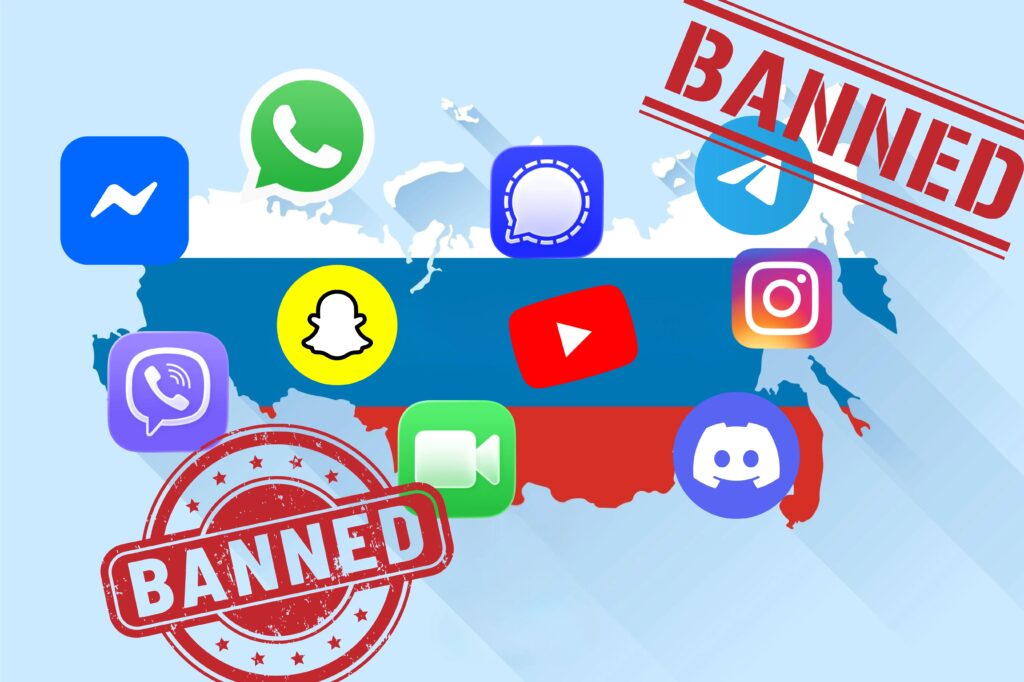
Over 100 million Russians woke up Wednesday to find their digital lifelines severed. WhatsApp, the encrypted messaging service that’s become as essential as morning coffee for many, simply stopped working. No warnings, no grace period—just a blank screen where conversations used to flow.
Russia’s internet regulator, Roskomnadzor, removed WhatsApp from the country’s DNS registry (essentially the internet’s phonebook that tells your device where to find websites and apps). Without this technical infrastructure, accessing the Meta-owned service became nearly impossible for ordinary users, even though VPN workarounds remain technically available.
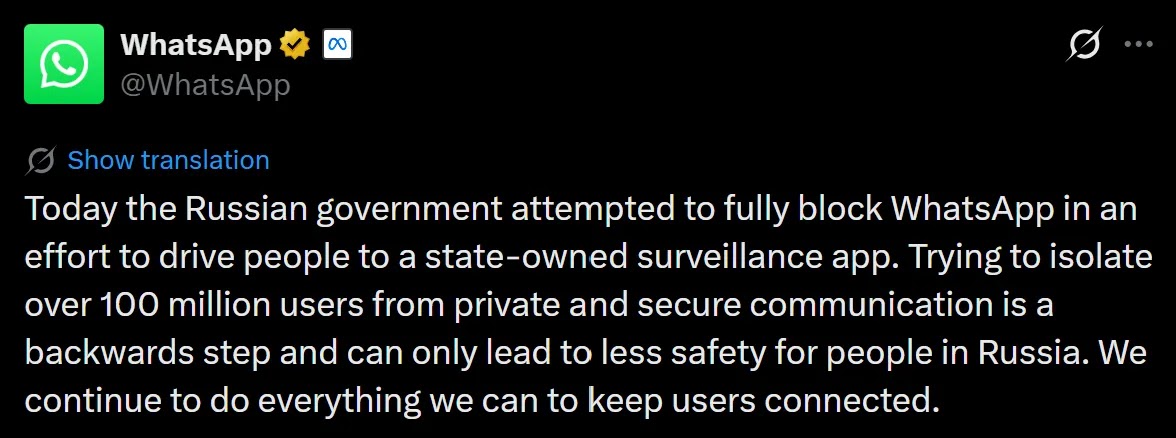 |
| WhatsApp Statement on Block |
“Today the Russian government attempted to fully block WhatsApp in an effort to drive people to a state-owned surveillance app,” WhatsApp declared on X (formerly Twitter), pulling no punches. “Trying to isolate over 100 million users from private and secure communication is a backwards step and can only lead to less safety for people in Russia.”
This isn’t Russia’s first rodeo with messaging app restrictions. Since August 2024, authorities had been systematically degrading WhatsApp’s functionality—first blocking voice and video calls, then throttling the service by 70-80% by December. But Wednesday’s move represents a complete escalation: full removal from Russia’s internet infrastructure.
Telegram, the other messaging heavyweight with roughly 90 million Russian users, faced similar throttling this week. The app’s Russian-born billionaire founder, Pavel Durov, fired back on social media with characteristic defiance.
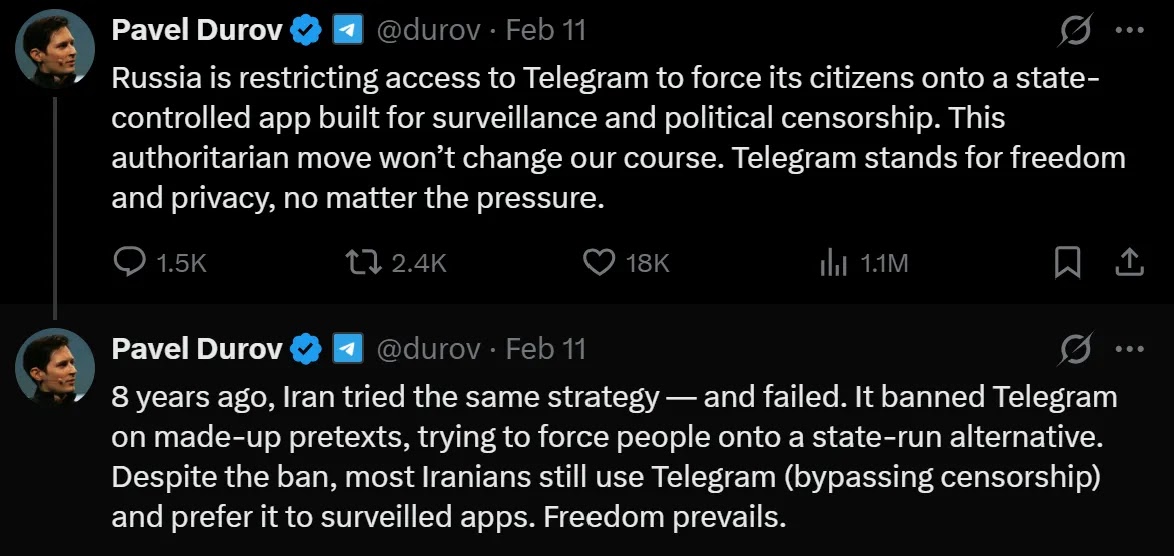 |
| Durov- Telegram CEO Statement |
“Russia is restricting access to Telegram to force its citizens onto a state-controlled app built for surveillance and political censorship,” Durov posted on X. “This authoritarian move won’t change our course. Telegram stands for freedom and privacy, no matter the pressure.”
Durov drew parallels to Iran’s failed 2018 attempt to ban Telegram, suggesting Moscow’s strategy would meet the same fate. He noted that Iranians still widely use the app despite official restrictions.
Meet MAX: Russia’s Answer to WeChat
So what’s the alternative the Kremlin wants Russians to embrace? Enter MAX, a state-backed “super-app” modelled after China’s WeChat. Developed by VKontakte (VK)—ironically, the social network Durov co-founded before fleeing Russia in 2014—MAX combines messaging, payment services, document storage, and access to government platforms.
Here’s the kicker: MAX lacks the end-to-end encryption that makes WhatsApp and Telegram appealing to privacy-conscious users. Instead, it openly states it will share user data with authorities upon request. Think of it as a one-stop shop for both your daily communications and potential government surveillance.
Since last year, all new devices sold in Russia must come with MAX pre-installed. State employees, teachers, and students have been mandated to use the platform. Property management companies can now only communicate with residents through the service. The message from the Kremlin is clear: adapt or be left behind.
The restrictions haven’t gone down smoothly, even among Kremlin supporters. Russian military bloggers—typically pro-war voices—have openly criticised the Telegram throttling, warning it disrupts communications for soldiers on the Ukrainian frontlines.
“I am concerned that slowing Telegram could affect the flow of information, if the situation deteriorates,” wrote Vyacheslav Gladkov, governor of Belgorod region bordering Ukraine, on his Telegram channel. The irony of posting this concern on the very platform being restricted wasn’t lost on observers.
One military correspondent channel, Two Majors, lamented that restricting Telegram would mean “people’s positions will now mostly be conveyed to the outside world not by people, but by our masters of the foreign ministry.” Another pro-war blogger bluntly stated that Roskomnadzor was helping “the enemy” and forcing Russian troops to rely on “carrier pigeons.”
According to Kremlin spokesman Dmitry Peskov, the WhatsApp block stems from Meta’s “unwillingness to comply with the norms and letter of Russian law.” These laws require foreign tech companies to store Russian users’ personal data on servers located within Russia and implement measures to prevent what Moscow labels “criminal and terrorist” activity.
Roskomnadzor justified the restrictions by claiming WhatsApp is used to “organise and carry out terrorist activities” and represents a primary tool for fraud and extortion. Meta has not publicly responded to these specific allegations.
The technical implementation involves removing DNS records—the digital addresses that connect domain names to IP addresses. Without these records in Russia’s national system, apps like WhatsApp become unreachable without technical workarounds like VPNs. Russia has already blocked Facebook, Instagram, X (formerly Twitter), LinkedIn, Discord, Snapchat, Signal, and Viber using similar methods.
What Users Can Do Now
For Russians determined to maintain access to encrypted messaging:
VPN Usage: Virtual Private Networks remain legal in Russia and can circumvent the blocks, though the government has restricted access to 439 VPN services and banned VPN advertising since September. AmneziaVPN, a censorship-resistant provider, reports a “huge wave of new users” for its free service.
Proxy Servers: Telegram offers built-in proxy support, though setting these up manually requires technical knowledge most users lack.
Multiple Solutions: Since protocol effectiveness can fluctuate daily based on government countermeasures, downloading several VPN apps allows users to switch between them when disruptions occur.
The reality, however, is that most everyday users won’t jump through these hoops. That’s exactly what the Kremlin is counting on—friction that slowly pushes the population toward state-controlled alternatives.
Russia’s messaging app crackdown fits into a broader digital sovereignty strategy that’s been accelerating since the February 2022 invasion of Ukraine. The government has studied China’s Great Firewall extensively and even purchased surveillance technology from Chinese firms.
The playbook is becoming predictable: accuse foreign platforms of failing to comply with vaguely defined “security requirements,” gradually degrade service quality, then offer a domestic alternative with conveniently fewer privacy protections. Critics see it as transparent censorship; Moscow frames it as protecting national security and citizen data.
WhatsApp and Telegram represent the latest casualties in this digital transformation, but they’re unlikely to be the last. YouTube has already experienced visible degradation, though it hasn’t been completely removed from DNS records—yet.
For over 100 million Russians who relied on WhatsApp for everything from family chats to business communications, the block represents more than technical inconvenience. It’s another barrier between them and the outside world, another tightening of the information space they inhabit.
Community Discussion
Join the conversation. Ask questions, share solutions, and help others.
Be the first to start the discussion!