
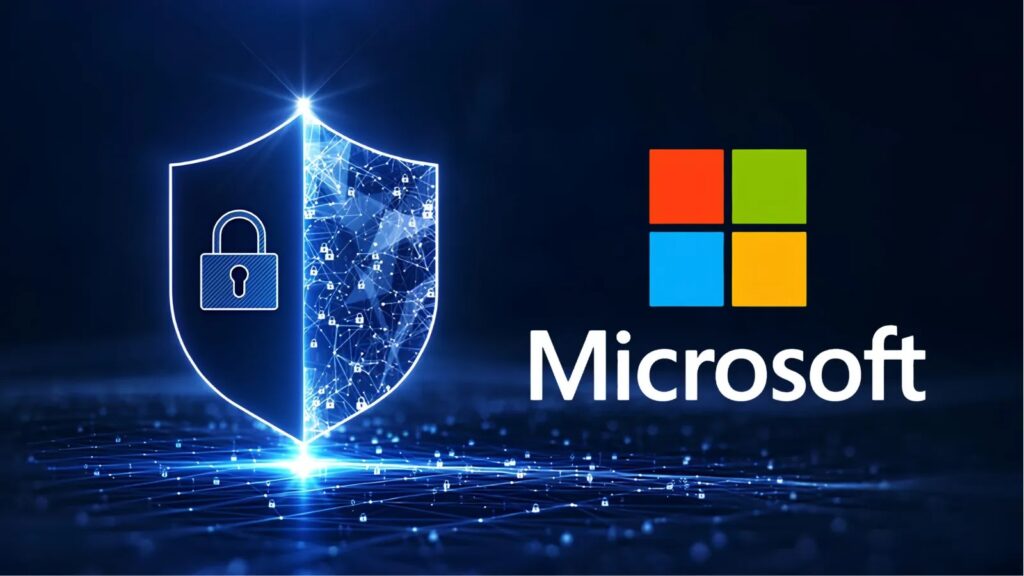
For decades, finding dangerous bugs buried deep inside Windows has been a job for elite human researchers armed with time and hard-won instinct. Today’s May 2026 Patch Tuesday quietly marks the moment that changes — because 16 of the vulnerabilities Microsoft patched this month were found not by a human, but by an AI system that argues with itself.
Microsoft’s CEO, Satya Nadella, noted that their new multi-model agentic security system brings together more than 100 specialized agents across frontier and custom models to find exploitable bugs, delivering top performance on the CyberGym benchmark. Microsoft used it ahead of Patch Tuesday to help find and fix 16 vulnerabilities.
Microsoft’s Autonomous Code Security (ACS) team publicly revealed MDASH — its multi-model agentic scanning harness — alongside this month’s security bulletin. The system orchestrates over 100 specialized AI agents across an ensemble of frontier and distilled models, each assigned a distinct role: auditor, debater, deduplicator, or prover.
The architecture is deliberately adversarial — one agent flags a suspicious code path, another argues against it, and a finding only advances if it survives that cross-examination. The whole point is to kill false positives before they waste an engineer’s morning.
The results are hard to argue with. On the public CyberGym benchmark — 1,507 real-world vulnerabilities drawn from 188 open-source projects — MDASH scored 88.45%, leading the leaderboard by roughly five points over the next competitor.
Tested against five years of confirmed Microsoft Security Response Center (MSRC) cases in two of Windows’ most scrutinized kernel components, it achieved 96% recall on clfs.sys and a clean 100% on tcpip.sys. On a private test driver seeded with 21 deliberately injected vulnerabilities, it found all 21 with zero false positives.
The Bugs That Prove the Point
Two of this month’s Critical findings demonstrate exactly why a single AI model — or a single human — would likely have missed them.
CVE-2026-33827 is a use-after-free (UAF) in the Windows kernel TCP/IP stack, reachable by a remote, unauthenticated attacker via specially crafted IPv4 packets that carry the SSRR routing option.
The flaw isn’t obvious because the vulnerable pointer release and its later reuse are separated by multiple validation checks and alternate control flow branches. No single function view connects the dots. MDASH caught it by cross-referencing analogous patterns elsewhere in the codebase, flagging the inconsistency — exactly what a senior human researcher would do after days of staring at the same code.
CVE-2026-33824 is worse from an exploitation standpoint. It lives in ikeext.dll, the Windows IKEv2 service that handles VPN keying for DirectAccess and Always-On VPN. A shallow memcpy during fragment reassembly leaves two owners holding the same heap pointer — and both eventually free it. That double-free spans six source files.
Two UDP packets, no race condition, no special timing required. Because IKEEXT runs as LocalSystem within svchost.exe, successful exploitation results in full system compromise before the attacker has authenticated to anything. Both bugs were patched in April and are now publicly disclosed.
These 16 CVEs don’t exist in isolation. May’s Patch Tuesday is a 120+ vulnerability release — fixing 120 flaws, 17 of which are rated Critical and 14 of which are remote code execution vulnerabilities. The network attack surface this month is particularly wide: high-value targets include Windows DNS Client (CVE-2026-41096), Netlogon (CVE-2026-41089), Windows Native Wi-Fi Miniport, and multiple Office and Word RCEs — components routinely exposed to untrusted network traffic and documents.
Critically, MDASH isn’t just another scanner. Microsoft’s architecture deliberately separates the system from any single model — when a better model ships, swapping it in is a configuration change, not a rebuild. That’s the strategic bet: the pipeline outlasts the model.
The broader industry is feeling the same pressure — Anthropic’s Mythos vulnerability discovery model recently surfaced 271 vulnerabilities in Firefox 150 prior to release, driving an unprecedented coalition of 12 companies, including Apple, Amazon, Cisco, and Microsoft, into a shared AI security research agreement called Project Glasswing.
NIST has already announced it can no longer enrich every CVE at the current volume. Oracle moved from quarterly to monthly patch cycles. The pipeline of AI-discovered bugs is now moving faster than the industry’s traditional patching machinery was designed to handle.
What You Should Do Right Now
If you manage Windows systems, this month’s priorities differ from usual. The MDASH-discovered flaws are concentrated in network-exposed kernel components — tcpip.sys, ikeext.dll, netlogon.dll, and dnsapi.dll — meaning internet-facing machines, VPN gateways, and domain controllers are the sharpest edge of risk. Patch those first. Microsoft Office RCEs exploitable via the preview pane are a close second priority for end-user environments.
There’s also a harder deadline looming: the Secure Boot certificate expiration on June 26, 2026, gives organizations roughly 45 days to complete deployment before Windows devices enter a degraded security state. May’s Patch Tuesday is the last comfortable window to handle that at scale.
The AI didn’t just find these bugs. It proved to them — by constructing triggering inputs, validating exploitability, and handing engineers confirmed findings rather than a speculation queue. That’s the real shift. The question for defenders going forward is less “can AI find bugs” and more “how fast can we patch what it finds”


Community Discussion
Join the conversation. Ask questions, share solutions, and help others.
Be the first to start the discussion!